
The BAME Community Voice
Our Voice in the UK
Speaking up for single parents, children, women and older adults
BAME Lone Parents Network exists to make sure that single parents, children, women and older adults from Black, Asian and minority ethnic communities are seen, heard and supported. We speak from practical experience: the families who come to us for food, training, grants, mentoring and encouragement tell us every week what is working and what is not.
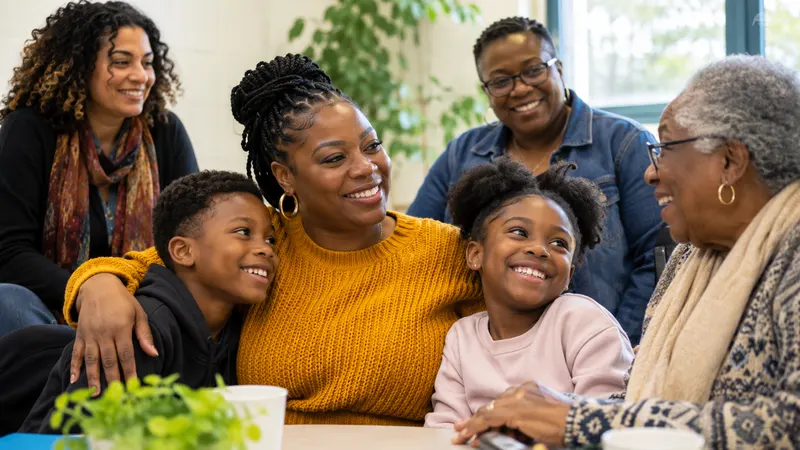
We bring those experiences to policymakers, councils, funders, researchers and the media, so that decisions about families and communities are shaped by the people they affect.
The wider picture
Why this voice matters
These figures come from official UK statistics. They describe the wider picture, not BAME Lone Parents Network's own work. Each figure links to its source, and we review them when new statistics are published.
lone-parent families in the UK in 2025.
Source: Office for National Statistics, Families and households in the UK: 2025
of lone-parent families in the UK were headed by mothers in 2025.
Source: Office for National Statistics, Families and households in the UK: 2025
of children in single-parent families were in relative low income after housing costs in 2024/25. Their rate of deep material poverty (27%) was three times that of children in couple families.
Source: GOV.UK, Tackling child poverty: monitoring and evaluation baseline report, Annex A
of Black households in England and Wales were lone-parent households, the highest of any ethnic group, compared with 10.2% of White households (2011 Census, the latest figures published on Ethnicity facts and figures).
Source: GOV.UK, Ethnicity facts and figures: Families and households
of people living alone in the UK in 2025 were aged 65 or over.
Source: Office for National Statistics, Families and households in the UK: 2025
Our positions
What we are calling for
01
Recognise BAME lone parents in policy and data
Single-parent families from minority ethnic communities face overlapping pressures. We ask national and local government, funders and researchers to collect and publish data that shows their experiences, and to involve them in designing services.
02
Make support culturally sensitive
Mental health, parenting and family services work best when people feel understood. We call for services that respect culture, faith and language, and that are delivered with communities rather than to them.
03
Open routes to work and enterprise that fit around caring
Single parents want to work, train and build businesses. We call for flexible training, affordable childcare and practical start-up support, so that caring responsibilities are not a barrier to independence.
04
Close the digital divide across generations
Families and older adults need devices, connectivity and confidence to use them, including with new technology such as AI. We call for digital inclusion programmes that reach minority ethnic families and people over 60.
05
Plan for people ageing without family support
A growing number of older people live alone or have no children or close relatives nearby. We call for this group to be recognised in planning for care, housing, loneliness and representation.
06
Widen educational opportunity
Talent is everywhere; opportunity is not. We call for better guidance on scholarships, university access and apprenticeships for children from single-parent and low-income families.
How we engage
Bringing community experience to decision-makers
Consultations and calls for evidence
We respond to government consultations and parliamentary calls for evidence where our experience can help.
Councils and local partnerships
We work with local services across the UK to make sure families from our communities know about and can reach the support available.
Media and commentary
Our founder, Princess Glory, is available for interviews and expert comment on single parenthood, ageing without family support, digital inclusion, women's enterprise and educational opportunity.
Conferences and roundtables
We speak at, host and take part in conferences, roundtables and community forums.
Research
We welcome conversations with universities and researchers who want to hear from the communities we serve, with proper consent and safeguarding.
Working with other organisations
We work alongside other single-parent and community organisations, including on national awareness days. In 2025 and 2026 we joined organisations across the UK and Ireland in the #SingleParentCommunity campaign for Single Parents Day, and our founder has taken part in Single Parents Day for three years.
Awareness calendar
Days we mark each year
National and international days when we raise awareness of the issues our communities face.
| When | Day | Our focus |
|---|---|---|
| 8 March | International Women's Day | Women's economic independence and HER ENTERPRISE |
| 21 March | Single Parents Day (UK and Ireland) | Celebrating single parents and the challenges they face. Our founder has taken part for three years. |
| 15 May | International Day of Families | Family strengthening and support |
| 1 June | Global Day of Parents | Parenting, workshops and peer support |
| June | Loneliness Awareness Week | GoldenCare 60+ and ageing without family support |
| 22 June | Windrush Day | The contribution of Caribbean and other communities to British life |
| 1 October | International Day of Older Persons | GoldenCare 60+ and digital inclusion for older adults |
| October | Black History Month (UK) | Our communities, our history and our future |
| 10 October | World Mental Health Day | MindBloom and culturally sensitive wellbeing |
| 11 October | International Day of the Girl | Girls' and women's empowerment |
Add our communities' voice to your work
Are you an MP, councillor, policy officer, researcher, journalist or event organiser? We would be glad to contribute experience from the families we support.