
Blog · 24 November 2026
Why Children Save Their Biggest Feelings for You: Coping With Challenging Behaviour at Christmas
Understanding behaviour, calmer holidays and support for parents, including families of children with additional needs
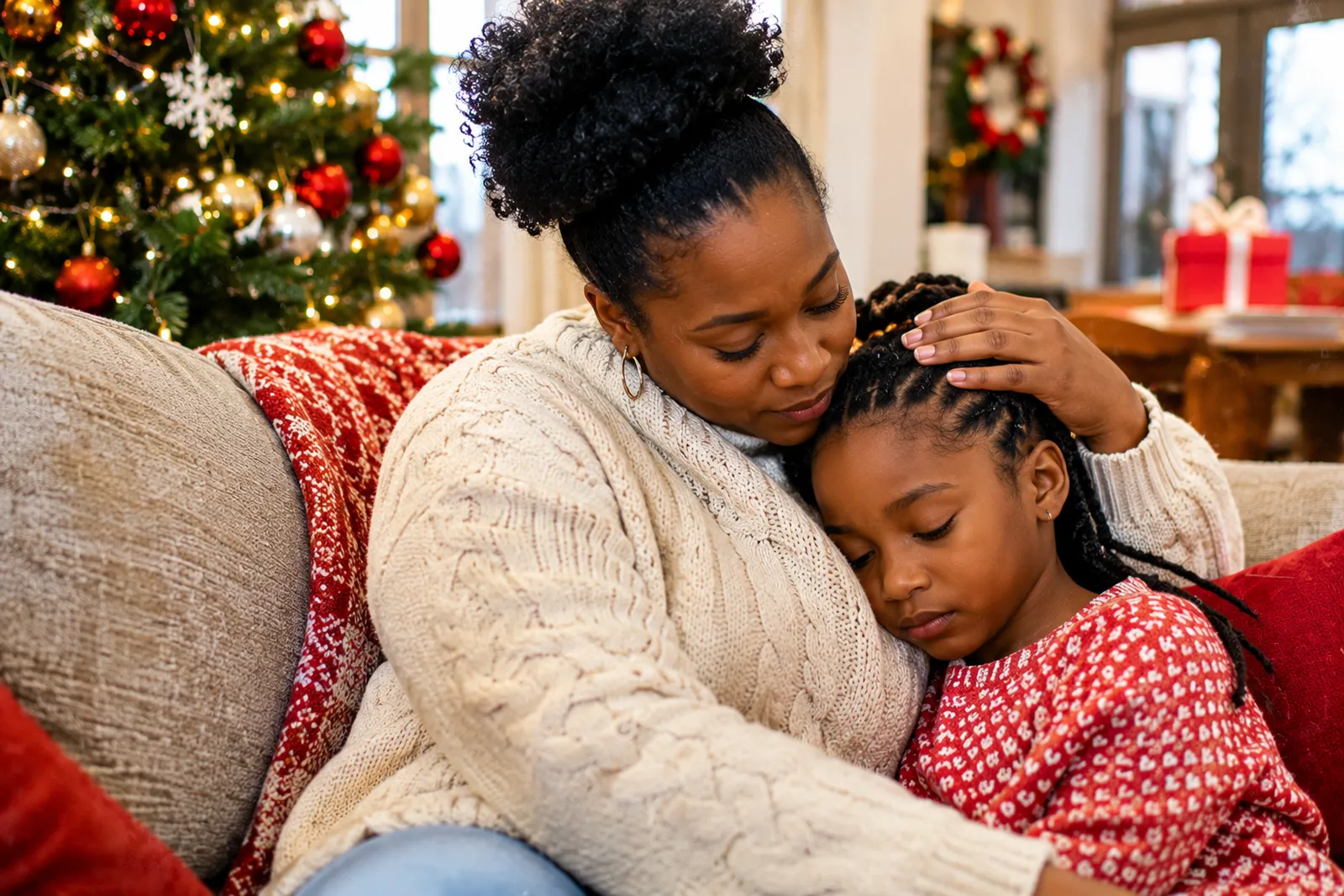
The Christmas holidays are coming, and with them long days at home, late nights, too much sugar, broken routines and high expectations. For many single parents, that can mean more arguments, more meltdowns and more moments of wanting to tear your hair out.
Then comes the confusing part. A teacher tells you your child is a delight. Grandma says they went straight to bed, helped with the washing-up and didn't put a foot wrong all weekend. And you are left wondering: why do they behave for everyone except me? Am I doing something wrong?
The answer, for most families, is no. It is one of the most common experiences of parenting, and it is rarely talked about.
Why children behave "worse" at home
You are their safe place. Children spend the day holding things together: at school, with friends, at a relative's house. They follow the rules because they want to be accepted, invited back and thought well of. When they get home to you, the effort of keeping it together lets go, and the tiredness, frustration and big feelings come pouring out. This is sometimes called "restraint collapse", and it is especially common after school and during busy holidays.
Home is where they feel secure. At home they know they belong. However welcome they are elsewhere, even at their other parent's home, they may still feel a little like a guest and behave accordingly.
You are the person they trust most. As the main carer, you are often your child's first and strongest attachment. They know that even when you are cross, you will not stop loving them or walk away. That security is exactly what allows them to show you their hardest feelings.
Behaviour is communication. When a child shouts, sulks, pushes boundaries or melts down, they are often telling you they are tired, hungry, overwhelmed, anxious or struggling with change, and that they need your help to manage it.
So, while it does not make the hard moments any easier, try to remember: when your child saves their biggest feelings for you, it is usually a sign of trust, not of failure. And when teachers and family praise their behaviour, that is your parenting they are seeing.
Christmas can make it harder
The holidays pile on the pressure for children as well as adults:
- Broken routines: later bedtimes, no school structure and lots of unstructured time
- Over-excitement: presents, parties, sweets, screens and visitors
- Changes and transitions: moving between two homes, or seeing relatives they don't know well
- Big emotions: missing a parent, family tension or worries about money that children pick up on
- Sensory overload: noise, crowds, lights and busy shops, which can be particularly hard for children with additional needs
Practical ways to keep the peace
- Keep a loose routine. Regular mealtimes, a predictable bedtime (even a later one) and a little daily structure help children feel settled.
- Plan quiet time. Build calm, low-key time into each day. A walk, a film under a blanket, colouring or reading together can prevent a meltdown later.
- Prepare them for what's coming. Talk through plans in advance: who is visiting, where you are going and when they will see their other parent. A simple picture calendar on the fridge helps younger children.
- Watch the triggers. Hunger, tiredness, too much sugar and too much screen time are common culprits. A snack, a rest or time away from screens can work wonders.
- Name the feeling. "You're really disappointed we have to leave" helps a child feel understood and calms things faster than arguing about the behaviour.
- Be calm and consistent. Keep a few clear, simple rules and stick to them kindly. Children feel safer when they know where the boundaries are.
- Notice the good. Praise specific good behaviour ("Thank you for sharing your new game with your sister") as often as you can.
- Give yourself a break. You cannot pour from an empty cup. Swap a few hours with a friend or another single parent, accept offers of help, and take a moment for yourself when you can.
- Handle handovers gently. Moving between homes can unsettle children. Keep handovers calm and positive, and expect some wobbly behaviour afterwards. It usually passes.
Children with special educational needs or disabilities
If your child is autistic, has ADHD or has other additional needs, Christmas can be especially overwhelming. Things that can help:
- Use visual timetables or a countdown so changes are not a surprise
- Keep familiar foods, toys and routines in place where you can
- Create a quiet space at home, and when visiting others, where your child can retreat
- Warn friends and family in advance about what helps your child, and what doesn't
- Choose quieter times for shopping or visits, and keep outings short
- It is fine to say no to events that will be too much
Contact, the charity for families with disabled children, has a free helpline on 0808 808 3555 (Monday to Friday, 9.30am to 5pm) and helpful information at contact.org.uk.
When you need more support
- Family Lives offers a free, confidential helpline for parents in England and Wales on 0808 800 2222, plus online chat and advice at familylives.org.uk. Check its website for opening hours over Christmas.
- Our Parenting Academy. BAME Lone Parents Network runs parenting workshops on positive parenting, boundaries, managing challenging behaviour, parenting teenagers and children's emotional wellbeing, including a four-week parenting skills programme.
- Your child's school or GP can help if you are worried about your child's behaviour, development or wellbeing.
- If you are struggling yourself, read our guide to looking after your mental health as a single parent, or call Samaritans free on 116 123, any time.
Remember
This Christmas, on the days when you feel at the end of your tether, try to remember what your child's behaviour may really be saying: you are the person I feel safest with. You are doing a better job than you think.
This article is general information, not professional advice. If you have concerns about your child's behaviour, development or safety, please speak to your child's school, your GP or one of the services above.
Need support? BAME Lone Parents Network supports single parents and families across the UK. Find out how we can help or contact us.